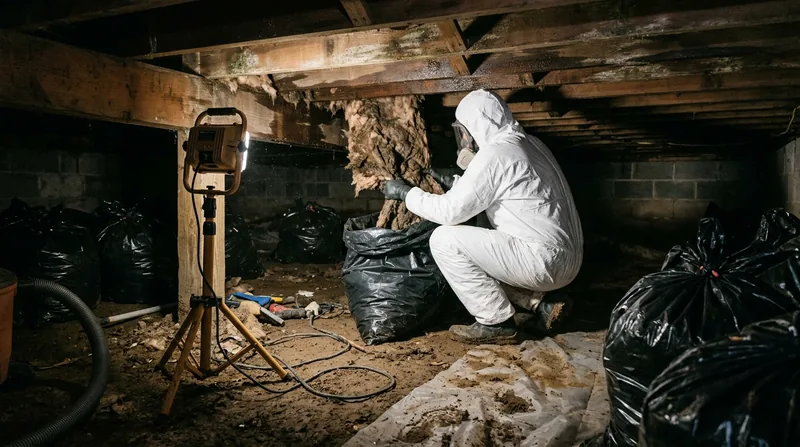




Attics and crawl spaces across Evansville and Vanderburgh County fill with insulation that fails over decades. Flattened fiberglass loses its R-value. Cellulose settles and compacts. Moisture from the Ohio River valley and seasonal humidity soaks into batts and blown-in material, turning them into dense, useless mats that trap moisture against wood framing and rim joists. When you're ready to upgrade to insulation removal and start fresh with spray foam or a modern replacement system, the old material has to come out first, bagged and hauled away. That's where we come in. We remove failed insulation cleanly so your attic or crawl space is ready for new work.
Why Insulation Removal Matters in Evansville's Mixed-Humid Climate
Evansville sits in IECC climate zone 4A with hot, humid summers and cold winters in the same house. That two-way vapor drive pushes moisture in from outside in summer and back out through walls and attics in winter. Old insulation that's already wet or compressed can't resist that movement, and it holds moisture against wood framing year-round. Mid-century ranches across Vanderburgh, Gibson, and Posey counties often have original fiberglass batts that have been flattened by foot traffic, animal nesting, or water damage from roof leaks or ice dams. Newer subdivisions pushing toward Newburgh and Darmstadt have larger attic volumes with insulation that's settled unevenly, leaving cold spots and high cooling bills in summer.
- Wet or compacted insulation loses R-value and traps moisture against wood, risking rot and structural damage over time.
- Removing old material before spray foam or blown-in replacement ensures the substrate is clean and the new system performs to spec.
- Flattened fiberglass in attics above lived-in spaces can harbor dust, debris, and animal waste that affects indoor air quality.
- A clean attic or crawl space before re-insulation lets you see framing, identify air leaks, and seal them properly before new insulation goes in.
Starting with a blank slate is the only way to get the performance you pay for.
Key info: In Evansville's climate, moisture moves in and out of walls and attics with every season change. Old insulation that's already damp can't block that flow, so removal before replacement isn't optional if you want the new system to work.
How We Remove Insulation: Step-by-Step Process for Evansville Homes
Insulation removal is a straightforward job, but it has to be done right. We assess the type and condition of what's in place, set up containment and ventilation to protect your home and our crew, remove the material efficiently, and bag it for proper disposal. The whole process usually takes one to three days depending on attic or crawl space size and access. Once it's out, you have a clean slate for spray foam, blown-in replacement, or whatever retrofit makes sense for your home.
- We inspect the attic or crawl space to identify the type of insulation, any moisture damage, and structural issues that need attention.
- We set up negative air and containment to keep dust and debris from spreading into your living spaces during removal.
- We remove the old material carefully, working section by section, and bag it for disposal or recycling where applicable.
- We vacuum and clean the substrate so it's ready for new insulation or spray foam application.
- We discuss options for what comes next, whether that's spray foam, cellulose, fiberglass, or a hybrid approach tailored to your budget and climate zone.
When you're ready to move forward with attic spray foam insulation or another replacement system, we're here to handle the removal and the install as one project.
Local example: A 1960s ranch in Highland with a vented attic and 6 inches of settled fiberglass took one day to remove. Once the old material was out, we sealed the rim joists and band beams, then installed closed-cell foam across the attic floor and roof deck. The homeowner went from 2-hour ice dams in winter to a dry, comfortable attic in one project.
Insulation Removal Methods and When to Use Each
| Approach | Description | Best for |
|---|---|---|
| Manual removal with bagging | Hand removal of batts, rolls, or loose fill into heavy-duty bags for disposal or recycling. | Fiberglass batts, mineral wool, or cellulose in accessible attics or crawl spaces without contamination. |
| Vacuum extraction with containment | Negative-air vacuum system pulls loose fill insulation into a collection container while containing dust and debris. | Blown-in cellulose, fiberglass, or mineral wool where dust control and clean air quality inside the home matter most. |
| Wet insulation removal with drying assessment | Removal of water-damaged batts or fill, followed by substrate inspection and drying before new insulation. | Attics or crawl spaces damaged by roof leaks, ice dams, or seasonal moisture in Evansville's humid climate. |
| Foam removal and substrate prep | Removal of failed spray foam or foam boards, cleaning of substrate, and preparation for new insulation or foam application. | Previous spray foam installations that failed, were applied incorrectly, or need replacement or upgrade. |
The method we choose depends on the material type, moisture condition, and what you're installing next. We'll recommend the most efficient and cost-effective approach for your specific job.
Insulation Removal Cost in Evansville: What to Expect
Insulation removal pricing in Evansville typically starts at $950 for a straightforward attic or crawl space job. The final cost depends on several factors: the square footage of the space, the type and condition of the insulation (wet material takes longer and may require special disposal), access and ventilation setup, and whether you're doing removal only or removal plus replacement. Larger jobs, contaminated material, or tight crawl spaces with limited headroom will cost more. The best way to know what your project will run is to get a written estimate that includes square footage, removal method, and disposal details.
We provide written estimates with R-value and thickness specifications so you know exactly what you're getting and why the price is what it is. Most homeowners in Evansville get 2 to 3 estimates before deciding, and that's smart. It helps you understand the scope, compare approaches, and catch any contractor who's cutting corners or skipping containment and ventilation. For detailed pricing and to schedule a free estimate, call (930) 212-3276 or visit our full pricing page.
Insulation Removal Near Me: What Evansville Homeowners Should Know Before Hiring
When you're looking for an insulation removal contractor near Evansville, you're making a decision that affects the quality and cost of whatever comes next. A sloppy removal leaves debris, damaged framing, or incomplete containment that compromises your new insulation. A thorough removal with proper ventilation and substrate prep sets you up for success. Here's what to check before you call anyone out.
- Ask any contractor to explain their containment and ventilation setup, and verify they use negative air during removal to protect your home.
- Request a written estimate that specifies square footage, insulation type, removal method, and disposal plan so you can compare apples to apples.
- Check that the contractor is fully insured and ask for a certificate of insurance that covers both removal and any follow-on installation work.
- Ask for references from recent jobs in Evansville or nearby cities like Newburgh, Chandler, or Fort Branch, and actually call them.
- Verify that the contractor understands local building code for attic ventilation, thermal barriers, and any permit requirements that apply to your address and local building department.
- If your home is in an HOA community, confirm the contractor is comfortable working with any architectural rules or notifications your community requires.
The cheapest estimate is rarely the best one. A contractor who shows up with a crew, no ventilation plan, and a price far below market is a red flag. Honest contractors explain what they're doing, why it matters, and what it costs. Ready to get started? Contact us for a free estimate or call (930) 212-3276.
Insulation Removal in Evansville: Pricing Guide
| Service | Price | Details |
|---|---|---|
| Standard attic insulation removal | Starting at $950 | Fiberglass batts or blown-in cellulose in accessible attics up to 1,200 sq ft with standard containment |
| Crawl space insulation removal | Starting at $1,100 | Batts or loose fill in crawl spaces with limited headroom, includes moisture assessment and substrate cleanup |
| Wet or contaminated insulation removal | Starting at $1,400 | Water-damaged or debris-filled material requiring special disposal, extended ventilation, and substrate drying time |
| Foam removal and substrate prep | On estimate | Failed spray foam or foam boards require on-site inspection to determine removal method, disposal, and substrate repair |
| Travel and mobilization | Included | No separate trip charge or mileage fee within Evansville and surrounding Vanderburgh County service areas |
| Free written estimate | No obligation | Response within 24 hours at (930) 212-3276, includes square footage, method, and disposal plan |
Indicative pricing, the exact cost depends on square footage, finish, and site access. Free personalized estimate within 24h at (930) 212-3276.


