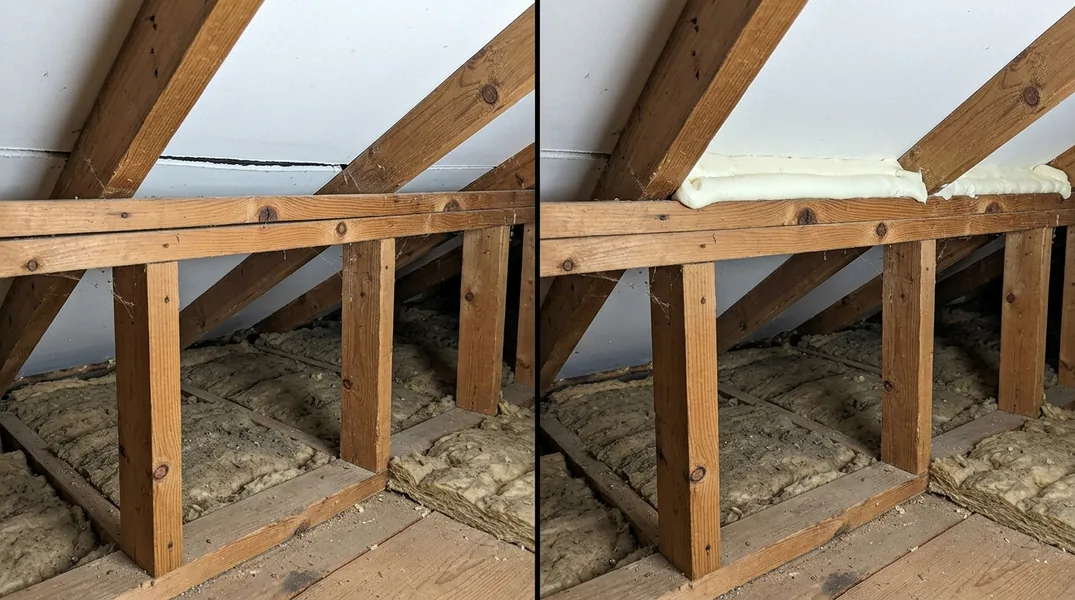
Understanding Your Attic Insulation Options
When it comes to keeping your Evansville home comfortable and energy-efficient, your attic is ground zero. Most homeowners face a critical decision: should they pursue simple air sealing, or invest in comprehensive Attic Spray Foam Insulation? The answer depends on your home's current condition, your budget, and your long-term energy goals.
Air sealing focuses on closing gaps, cracks, and penetrations where conditioned air escapes. It's a targeted approach that addresses specific problem areas. Full spray foam insulation, by contrast, creates a comprehensive thermal and air barrier throughout your entire attic space. Understanding the strengths and limitations of each method will help you make an informed decision that delivers real comfort and savings for years to come.
What Is Air Sealing and When Does It Make Sense?
Air sealing is the process of identifying and closing unwanted air leaks in your attic. Common culprits include gaps around electrical wiring, plumbing penetrations, ductwork, recessed lights, and the attic hatch. Using caulk, weatherstripping, and foam sealant, contractors can seal these openings and significantly reduce air infiltration. For homeowners with a tight budget or homes that already have adequate insulation, air sealing can be an affordable first step toward better energy efficiency.
The real benefit of air sealing is that it stops conditioned air from escaping without adding much material cost. However, air sealing alone does not increase your home's insulation R-value. If your attic insulation is already below recommended levels for your region, air sealing will improve comfort but won't fully solve the problem. Think of air sealing as plugging the holes in a bucket; it prevents waste but doesn't increase capacity. Many homeowners in Evansville find that combining air sealing with modest insulation upgrades delivers the best return on investment.
The Case for Full Spray Foam Insulation in Evansville Attics
Attic Spray Foam Insulation offers a fundamentally different approach. Unlike traditional fiberglass batts or blown-in cellulose, spray foam expands to fill every cavity, crack, and corner of your attic space. This creates a continuous thermal barrier that simultaneously insulates and air-seals your home. The result is superior energy efficiency, better moisture control, and often a more durable solution that lasts decades without settling or degradation.
Spray foam comes in two main types: Closed Cell Spray Foam Insulation and Open Cell Spray Foam Insulation. Closed cell foam has a higher R-value per inch (typically 6 to 7 per inch) and offers superior moisture resistance, making it ideal for attics in humid climates or homes prone to water issues. Open cell foam has a lower R-value per inch (around 3.5 to 4) but is more affordable and still provides excellent air sealing and thermal performance. Both types eliminate the need for separate air sealing because the foam itself becomes your air barrier.
Spray Foam Insulation R-Value Per Inch and R-Value Requirements by State
Understanding R-value is crucial when evaluating insulation options. R-value measures thermal resistance; higher numbers mean better insulation performance. The key difference between spray foam types matters here: closed cell spray foam typically delivers 6 to 7 R-value per inch, while open cell foam provides 3.5 to 4 R-value per inch. This means you need less closed cell foam to achieve the same thermal performance, though it comes at a higher pricing point.
Indiana, where Evansville is located, recommends attic insulation levels between R-38 and R-49 depending on your specific climate zone and heating/cooling patterns. The Department of Energy suggests that most homes in Indiana benefit from R-49 insulation in the attic for optimal efficiency. If you choose closed cell spray foam at 6 R-value per inch, you would need approximately 8 to 9 inches of foam to meet R-49. With open cell foam at 3.5 R-value per inch, you would need roughly 14 inches. Both approaches can meet code requirements; the choice depends on your budget, available attic space, and performance goals.
Attic Spray Foam Insulation Cost in Evansville: What to Budget
Cost is often the deciding factor between air sealing and full spray foam. Air sealing typically costs between $500 and $2,000 depending on how many penetrations need to be sealed and the complexity of your attic layout. It's a relatively low-cost intervention that can yield immediate comfort improvements and modest energy savings. However, if your existing insulation is already thin or settling, air sealing alone won't deliver the thermal performance upgrade many homeowners seek.
Full spray foam insulation is a more significant investment, typically ranging from $3,000 to $8,000 or more for a complete attic, depending on square footage and foam type. Closed cell foam costs more upfront but delivers higher R-value per inch and superior moisture control. Open cell foam is more budget-friendly and still provides excellent performance for most Evansville homes. The federal insulation tax credit ended on December 31, 2025, so ask your utility company about any current rebates instead. Many homeowners recoup their investment through energy savings within 5 to 10 years, and spray foam typically lasts 80+ years with minimal maintenance.
Insulation Rebates Available to Homeowners
Federal tax incentives make spray foam insulation more affordable than many homeowners realize. This credit applies to both air sealing and insulation projects, making it a substantial incentive to upgrade your attic now rather than later.
Many utility companies in Indiana offer free estimate consultations that include information about local rebate programs. These rebates can range from $300 to $1,500 depending on your utility provider and the scope of work. Some programs offer enhanced rebates for closed cell foam or for projects that achieve specific energy savings thresholds. This makes full spray foam competitive with or cheaper than air sealing alone when incentives are factored in.
How Thick Should Spray Foam Be for Maximum Efficiency?
The ideal thickness of spray foam depends on your climate zone, the type of foam, and your R-value target. As mentioned earlier, Indiana recommends R-38 to R-49 in the attic. If you're installing closed cell spray foam at 6 R-value per inch, you'll want 8 to 9 inches to hit R-49. If you're using open cell foam at 3.5 R-value per inch, plan for 14 to 15 inches. Most attics have sufficient rafter depth to accommodate these thicknesses, though your contractor should verify this during an initial inspection.
There's a practical consideration here: thicker foam provides better performance but also higher cost and potential conflicts with ventilation or existing ductwork. Many homeowners find that 8 to 10 inches of closed cell foam or 12 to 15 inches of open cell foam strikes the right balance between performance, cost, and practicality. Your contractor will evaluate your specific attic geometry, existing insulation, and ventilation needs to recommend the optimal thickness. This is why a detailed free estimate from a local professional is invaluable before making your final decision.
Making Your Final Decision: Air Sealing vs. Full Spray Foam
So which option is right for your home? If your attic already has adequate insulation (R-38 or higher) and you're primarily concerned about comfort or minor air leaks, air sealing alone may be sufficient. If your attic insulation is thin, settling, or missing in spots, or if you're planning to stay in your home for many years and want maximum efficiency and comfort, full spray foam insulation is the superior choice despite higher upfront cost.
The best approach is to get a professional assessment. Evansville Spray Foam Insulation can evaluate your current attic condition, calculate your R-value needs, and explain both options with realistic costs and savings projections. Contact Evansville Spray Foam Insulation today at (930) 212-3276 or visit our website for a free estimate. We'll help you understand your options, explore available incentives, and install the solution that delivers comfort and savings for decades to come.
Looking for a professional spray foam insulation contractor in Evansville? Evansville Spray Foam Insulation responds fast for all your spray foam insulation needs.
Get a Free Quote