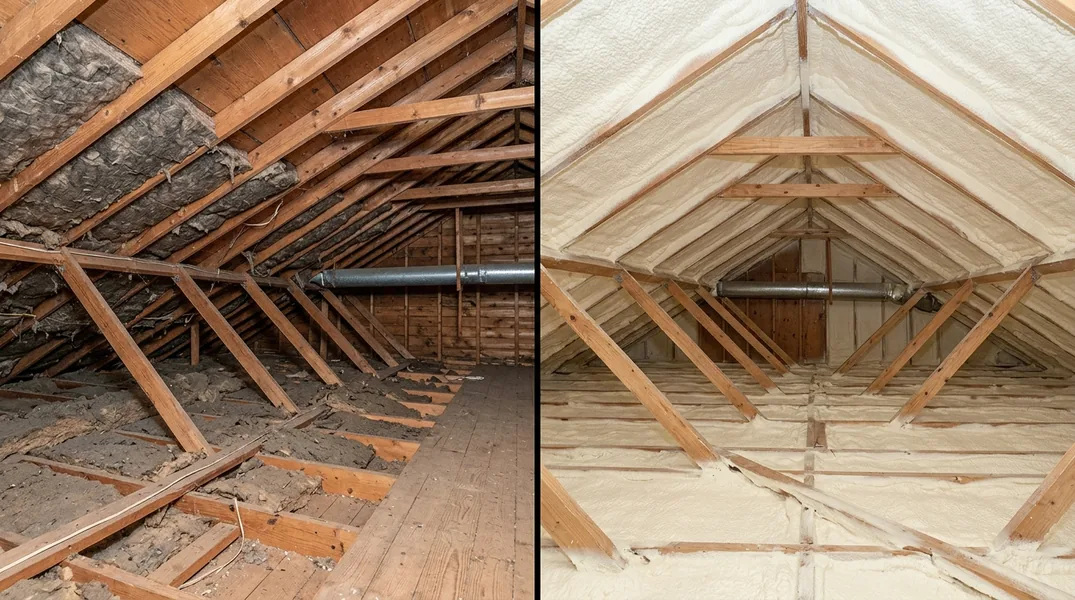
Preserving Character While Upgrading Energy Efficiency
Riverside's older homes are architectural treasures. Many feature original hardwood floors, vintage trim work, and period details that define the neighborhood's character. The challenge for homeowners is clear: how do you improve energy efficiency without compromising the historic integrity that makes these properties special?
The answer lies in choosing the right insulation method. Attic Spray Foam Insulation has become increasingly popular among Evansville homeowners restoring older properties because it works within existing structures without requiring major renovation. Unlike traditional fiberglass batts that need to be ripped out and replaced, spray foam can be applied directly to attic joists, crawl spaces, and rim joists, leaving your home's exterior and interior finishes untouched. This approach respects the original architecture while delivering modern thermal performance.
Is Spray Foam Insulation Worth It for Older Homes?
Whether spray foam insulation is worth the investment depends on your priorities and your home's current condition. For Riverside homeowners with older properties, the value proposition is compelling. Older homes typically have poor or degraded insulation, leading to significant energy waste. Heating and cooling costs can run 30 to 50 percent higher than they should, especially in Indiana's variable climate. Spray foam creates an air seal that traditional insulation cannot match, reducing energy consumption and lowering utility bills year after year.
Beyond energy savings, spray foam adds structural value to your home. It provides additional bracing to roof decks and walls, improves moisture control, and can help prevent pest infiltration. If you're planning to stay in your Riverside home long-term, the return on investment becomes clear within five to ten years through reduced energy costs alone. Additionally, many homeowners find that improved comfort (fewer drafts, more consistent temperatures) and better indoor air quality justify the expense even before calculating energy savings. For those considering selling, an energy-efficient, well-insulated attic is a genuine selling point that buyers notice and value.
Understanding Spray Foam Insulation Safety and Off-Gassing Concerns
Safety is a legitimate question when considering any building material. Spray foam insulation has generated some concern about off-gassing, and it's important to separate fact from fiction. When spray foam is properly installed by certified professionals and has fully cured (typically 24 to 48 hours), it is safe. The chemicals involved in the application process do release odors during installation and the initial curing period, but these dissipate as the foam hardens. High-quality foam products meet EPA and building code standards for indoor air quality.
The key to safety is professional installation and proper ventilation during the curing process. Evansville Spray Foam Insulation uses industry-leading products that comply with all safety regulations, and our technicians follow strict application protocols. We recommend that homeowners remain out of the attic for 24 hours after application to allow complete curing. Once cured, spray foam poses no ongoing off-gassing risk. If you have specific health concerns or sensitivities, discuss them with your installer before work begins. Proper communication ensures we can recommend the best product and application method for your situation.
Spray Foam Insulation Pros and Cons: A Balanced Look
Like any building product, spray foam has genuine advantages and some limitations worth understanding. The primary advantages are exceptional thermal performance (R-value of 3.5 to 7 per inch depending on type), superior air sealing that eliminates drafts, moisture resistance, and longevity (spray foam lasts the life of your home). It's particularly effective in irregular spaces, around pipes, wires, and obstacles where traditional insulation leaves gaps. For Riverside homeowners with older homes full of quirky angles and unconventional framing, this adaptability is invaluable.
The main drawbacks include higher upfront cost compared to fiberglass, potential for improper installation if contractors lack experience, and the need for professional application (you cannot DIY spray foam). Some homeowners also worry about off-gassing, though as discussed above, this is manageable with proper installation and ventilation. Closed Cell Spray Foam Insulation offers higher R-value and better moisture protection but costs more than Open Cell Spray Foam Insulation, which is more affordable but offers lower R-value. Understanding these trade-offs helps you make an informed decision aligned with your budget and performance goals.
Common Spray Foam Insulation Problems and How to Avoid Them
Most spray foam problems stem from poor installation rather than the product itself. Common issues include inadequate coverage (leaving thermal gaps), improper mixing of chemical components, application in unsuitable weather conditions, and failure to account for settling or thermal movement. When foam is applied too thickly in a single pass or in cold temperatures, it can crack or shrink over time. Conversely, foam applied too thinly won't achieve the desired R-value. These problems are entirely preventable by hiring experienced, certified contractors who understand regional climate conditions and best practices.
Another consideration is compatibility with your home's existing systems. Spray foam should never completely seal your attic without proper ventilation planning. If your roof vents are blocked by foam, moisture can accumulate and cause rot. Professional installers at Evansville Spray Foam Insulation account for ventilation requirements and work within your home's specific envelope design. We also ensure that electrical outlets, light fixtures, and other penetrations are properly handled. By working with qualified professionals who understand Riverside's older home construction and local building codes, you avoid these pitfalls entirely and enjoy decades of reliable performance.
Attic Spray Foam Insulation Cost in Evansville: What to Budget
Cost is a natural consideration for any home improvement project. Spray foam insulation typically ranges from 1.50 to 3.50 dollars per board foot, depending on foam type, attic size, complexity, and regional market factors. A typical 1,500-square-foot attic might cost between 1,500 and 4,500 dollars for complete coverage, with closed-cell foam at the higher end and open-cell at the lower end. While this is more expensive than fiberglass batts (typically 300 to 800 dollars for the same space), the superior performance, durability, and energy savings justify the premium for most homeowners.
To get an accurate picture of what spray foam insulation will cost for your specific Riverside home, request a free estimate from Evansville Spray Foam Insulation. We'll assess your attic, discuss your goals, and provide transparent pricing based on your home's actual needs. Many homeowners finance this improvement through energy-efficient home loans or utility rebate programs that offset the initial expense. Over a 20-year period, most see a positive return through energy bill reductions alone. Call us at (930) 212-3276 to discuss your project and learn how spray foam can transform your home's comfort and efficiency.
Looking for a professional spray foam insulation contractor in Evansville? Evansville Spray Foam Insulation responds fast for all your spray foam insulation needs.
Get a Free Quote