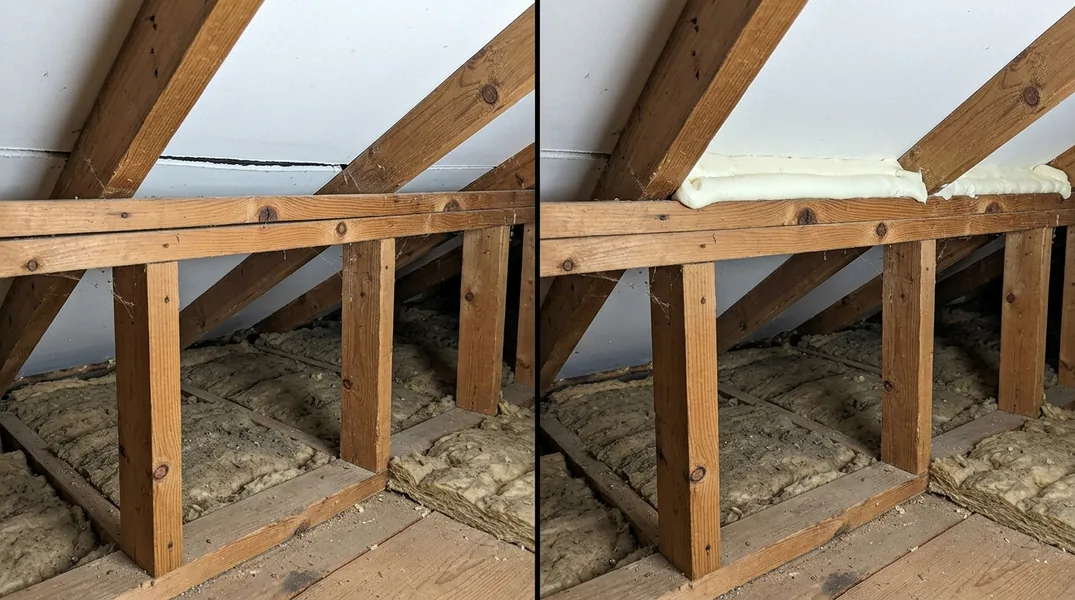
Understanding Spray Foam Insulation Types
When it comes to upgrading your home's insulation, attic spray foam insulation has become one of the most effective solutions for homeowners in Evansville. Unlike traditional fiberglass batts or blown-in cellulose, spray foam expands to fill every crack and crevice in your attic space, creating an air-tight seal that dramatically improves energy efficiency. However, not all spray foam is created equal. The two primary types, open cell and closed cell, offer distinctly different benefits and drawbacks that can significantly impact your home's comfort and your utility bills.
Understanding the structural differences between these two foam types is essential for making an informed decision. Open cell spray foam has a more porous structure, with cells that are not completely enclosed. Closed cell spray foam, by contrast, features tightly packed cells that are completely sealed, creating a denser, more rigid material. These fundamental differences affect everything from insulation value to moisture resistance to cost, which is why choosing the right type for your specific situation matters so much.
Open Cell Spray Foam: Benefits and Limitations
Open Cell Spray Foam Insulation is an excellent choice for many homeowners because it provides superior sound dampening and remains flexible even after it cures. The open structure allows sound waves to pass through and dissipate, making it ideal if you're concerned about noise from outside or between rooms. Additionally, open cell foam is more affordable than closed cell alternatives, which can make it an attractive option if you're working within a tight budget. It also allows moisture vapor to pass through, which can be beneficial in certain applications where you want the attic to breathe naturally.
However, open cell foam does have some limitations that you should consider before committing. It offers a lower R-value per inch, typically ranging from R-3.6 to R-3.8 per inch, meaning you'll need a thicker application to achieve the same insulation value as closed cell foam. More importantly, open cell foam is not vapor impermeable, so it won't provide the same level of moisture protection in humid climates like those experienced in Evansville. If your attic is exposed to significant moisture or if you're looking to create a truly sealed attic insulation system, open cell may not be your best option.
Closed Cell Spray Foam: Superior Protection and Performance
Closed Cell Spray Foam Insulation delivers superior insulation performance and moisture resistance, making it the preferred choice for homeowners seeking maximum energy efficiency and durability. With an R-value of R-6 to R-7 per inch, closed cell foam provides nearly double the insulation value of open cell foam in the same thickness. This means you can achieve better insulation performance with less material, which translates to greater energy savings over time. The dense, rigid structure also provides structural reinforcement to your roof, which can be particularly valuable in areas prone to severe weather.
The vapor-impermeable nature of closed cell foam makes it ideal for creating an unvented attic spray foam environment. When properly installed, closed cell foam acts as both an insulator and an air barrier, preventing moisture infiltration and condensation issues that can lead to mold growth and structural damage. This is especially important in the Evansville climate, where seasonal humidity variations can pose challenges to traditional insulation methods. The trade-off is that closed cell foam costs more upfront, but the long-term energy savings and protection often justify the investment for homeowners committed to lasting home performance.
Comparing R-Value, Moisture Control, and Air Sealing
When evaluating spray foam options, three critical factors should guide your decision: R-value, moisture control, and air sealing capability. R-value measures thermal resistance, and closed cell foam's superior R-value per inch means you'll achieve better insulation performance faster. For an attic that needs to reach R-38 to R-60 depending on your climate zone, closed cell foam requires only 6 to 9 inches, while open cell foam would need 10 to 16 inches. This difference becomes significant when you're dealing with limited attic height or complex roof geometry.
Moisture control is equally important, particularly in humid regions. Closed cell foam's vapor barrier properties prevent moisture from entering the insulation and reaching the roof deck, which protects against rot, mold, and structural decay. Open cell foam, while breathable, doesn't offer this protection. Air sealing is where both types excel compared to traditional insulation, but closed cell provides a more complete seal due to its density and rigidity. The combination of superior R-value, moisture resistance, and air sealing makes closed cell spray foam the more comprehensive solution for homeowners seeking maximum long-term performance and protection.
Attic Spray Foam Insulation Cost in Evansville: What to Budget
Cost is often the deciding factor for homeowners considering spray foam insulation upgrades. Open cell spray foam typically ranges from $0.50 to $1.00 per board foot, while closed cell spray foam costs between $1.00 and $1.50 per board foot. For a typical 1,500 square foot attic, you might spend $2,000 to $4,000 for open cell foam or $3,000 to $6,000 for closed cell foam, depending on application thickness and local labor costs. While these figures represent a larger upfront investment than traditional insulation, the energy savings often recoup the cost within 5 to 10 years through reduced heating and cooling expenses.
When evaluating pricing for your specific project, remember that the cheapest option isn't always the best value. Closed cell foam's superior R-value means you might need less material, and its moisture protection and durability could extend your roof's lifespan. The most accurate way to understand your investment is to request a free estimate from Evansville Spray Foam Insulation. Our team can evaluate your attic's specific needs, recommend the best foam type for your situation, and provide transparent pricing based on square footage and application depth.
Making Your Final Decision: Which Type is Right for You?
Choosing between open cell and closed cell spray foam ultimately depends on your priorities, budget, and your home's specific characteristics. If you're primarily concerned with cost and sound insulation, and your attic is relatively dry, open cell foam may be sufficient. However, if you want maximum energy efficiency, moisture protection, and long-term durability, closed cell foam is the superior choice. Homeowners in Evansville who live in older homes or homes with existing moisture issues should strongly consider closed cell foam's protective qualities.
The best way to move forward is to consult with experienced professionals who understand your local climate and building conditions. Evansville Spray Foam Insulation has helped hundreds of homeowners throughout the region make this decision based on their unique circumstances. We'll assess your attic's current condition, identify any existing moisture or air leakage problems, and recommend the spray foam type that delivers the best long-term value for your investment. Contact us at (930) 212-3276 or visit our website to schedule your free estimate today. Let's transform your attic into a high-performance space that keeps your home comfortable and your energy bills low for years to come.
Looking for a professional spray foam insulation contractor in Evansville? Evansville Spray Foam Insulation responds fast for all your spray foam insulation needs.
Get a Free Quote